Sailors with cannon
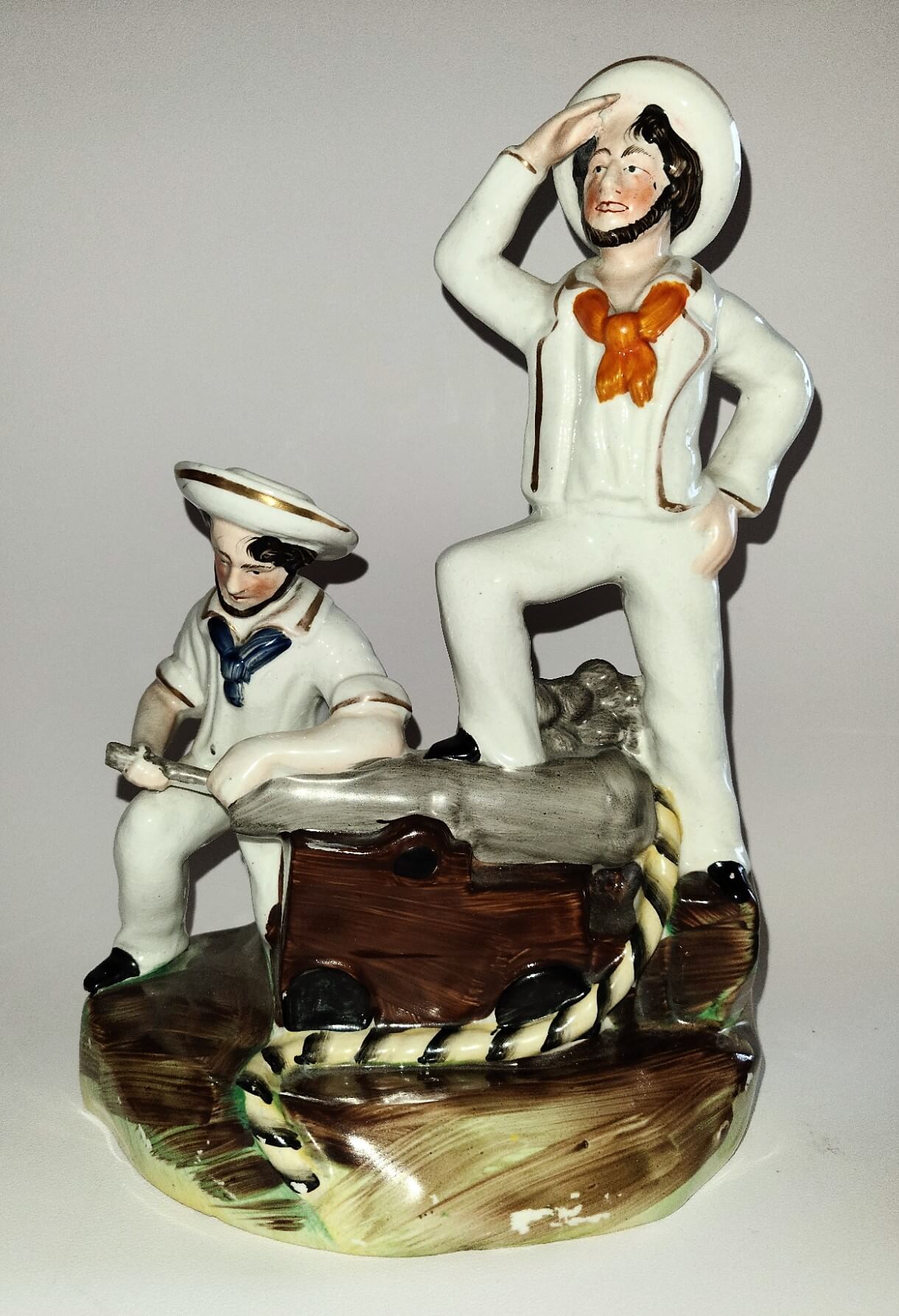
This is a rare Crimean War figure representing two naval gunners with a cannon. One sailor stands upright with his right foot on the cannon, and his right hand to his head as if saluting. The second sailor is kneeling while priming the cannon. This figure is about 9 ½” tall and dates to around 1855. Pugh’s latest edition of Staffordshire Portrait Figures of the Victorian Era illustrates this figure on page 281, figure 233. Harding’s Victorian Staffordshire Figures Book One, page 243, figure 857 also shows the figure.
Why did the Staffordshire potters make Crimean War figures?
by Sarah Gillett
The Crimean War (1853-1856) was a brutal conflict that took its name from the Crimean Peninsula on the Black Sea. The war, which claimed an estimated 650,000 lives, pitted Britain, France, Turkey and Sardinia against Russia. It started with Russian Tsar Nicholas I’s invasion of the Turkish Danubian principalities of Moldavia and Wallachia (now Romania). Britain and France wanted to prop up the ailing Ottoman Empire and saw Nicholas’s power grab as a danger to their trade routes, so were determined to stop him advancing. French and Turkish troops far outweighed the British troops, and the War Office was forced to send in militia men to support the army and navy. The war’s most enduring symbol of failure is that of the Charge of the Light Brigade at the Battle of Balaklava.
The Crimean War is considered to be the first modern technological conflict, making use of mass-produced rifles, armoured assault vehicles, telegraphs to communicate messages and railways to transport supplies and ammunition across Europe. The war was also one of the first to be documented in photographs, drawings and reports, as newspapers sent correspondents and artists to the battlefields for ‘live’ updates. The Times, The London Illustrated News, and other papers recreated these sketches and watercolours as woodblock illustrations, often pairing them with vivid written accounts, bringing the impact of the war home to ordinary people in Britain.
From these images the Staffordshire potters immortalised many Crimean War personalities including Florence Nightingale, Omar Pasha, Lord Raglan and General Simpson. Two popular French generals portrayed by the potters were Canrobert and Pelissier. They made figures of the famous British Admirals Napier and Dundas who sailed the fleet of ships to the Crimea, carrying not only soldiers but also horses, artillery and weapons. The resulting drawings and paintings inspired figures of naval gunners and many other patriotic figures of sailors, soldiers and allied forces groups. You can also find Staffordshire figures of Fort Malakoff, commemorated as the battle where the French held off Russian troops in 1855, leading to the end of the war.
In 1854 a Greek tortoise named Timothy was found on a Portuguese ship by a captain of the Royal Navy. Timothy served as a mascot throughout the war, living to 160 years old. He died in 2004 at Powderham Castle in Devon, where he had lived since 1892. As far as we know, there is no Staffordshire figure of Timothy, but we are keeping our eyes open!
More Figures of the month
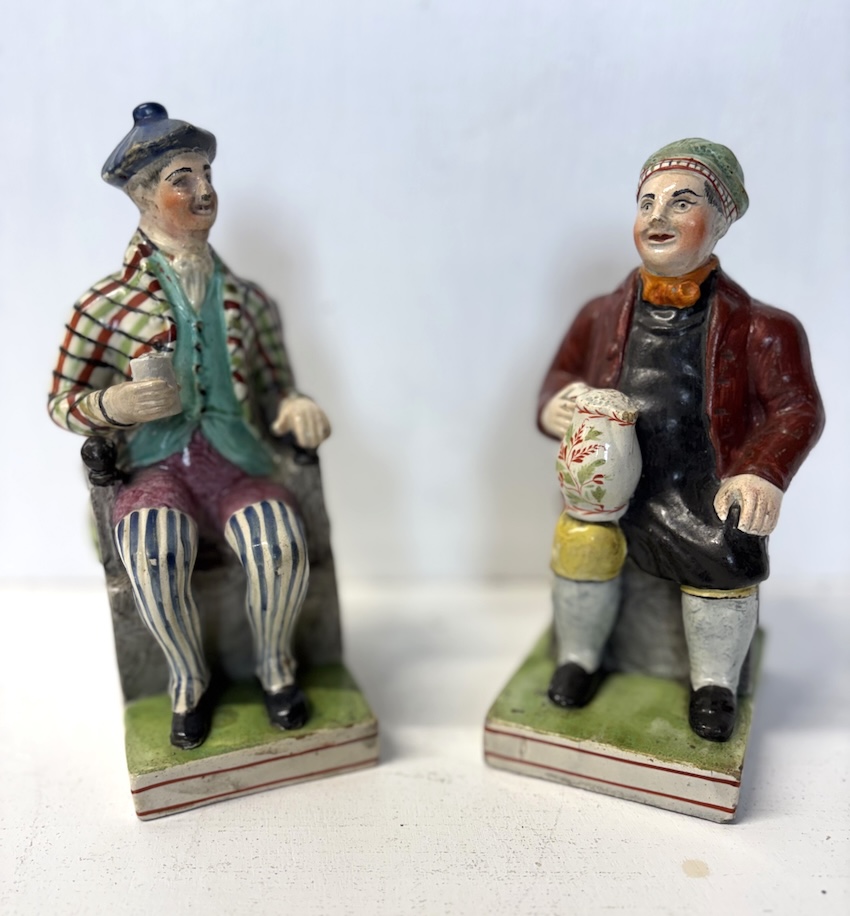
Tam O’Shanter and Souter Johnny
This is a rare pair of early figures of Tam O’Shanter and Souter Johnny, characters in the Robert Burns play “Tam O’Shanter”, written in 1790.
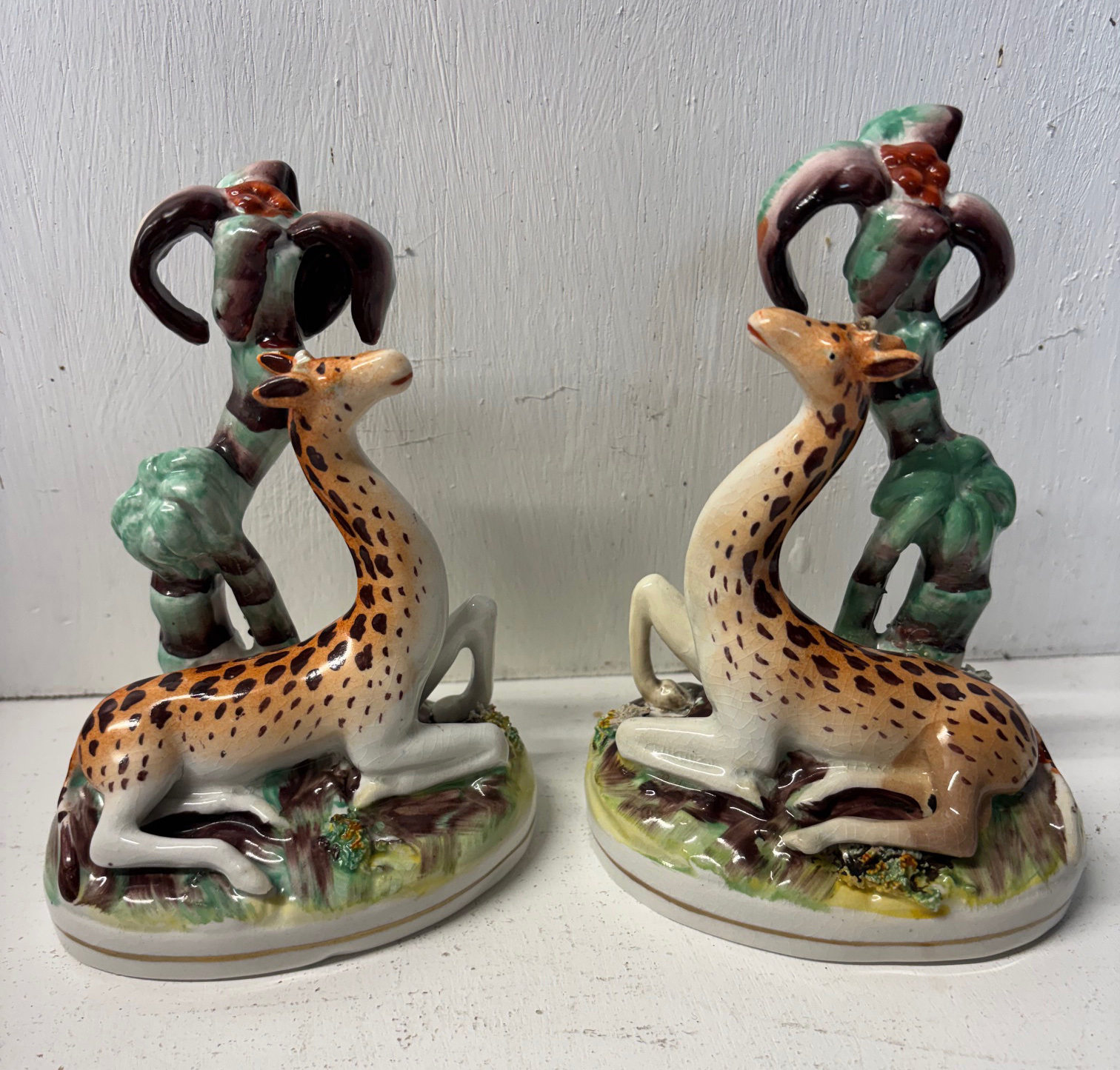
A pair of giraffes
This is a fine pair of Staffordshire giraffes, seated below palm trees, each approximately 5 ½” tall. These figures are very rare, dating to approximately 1850.
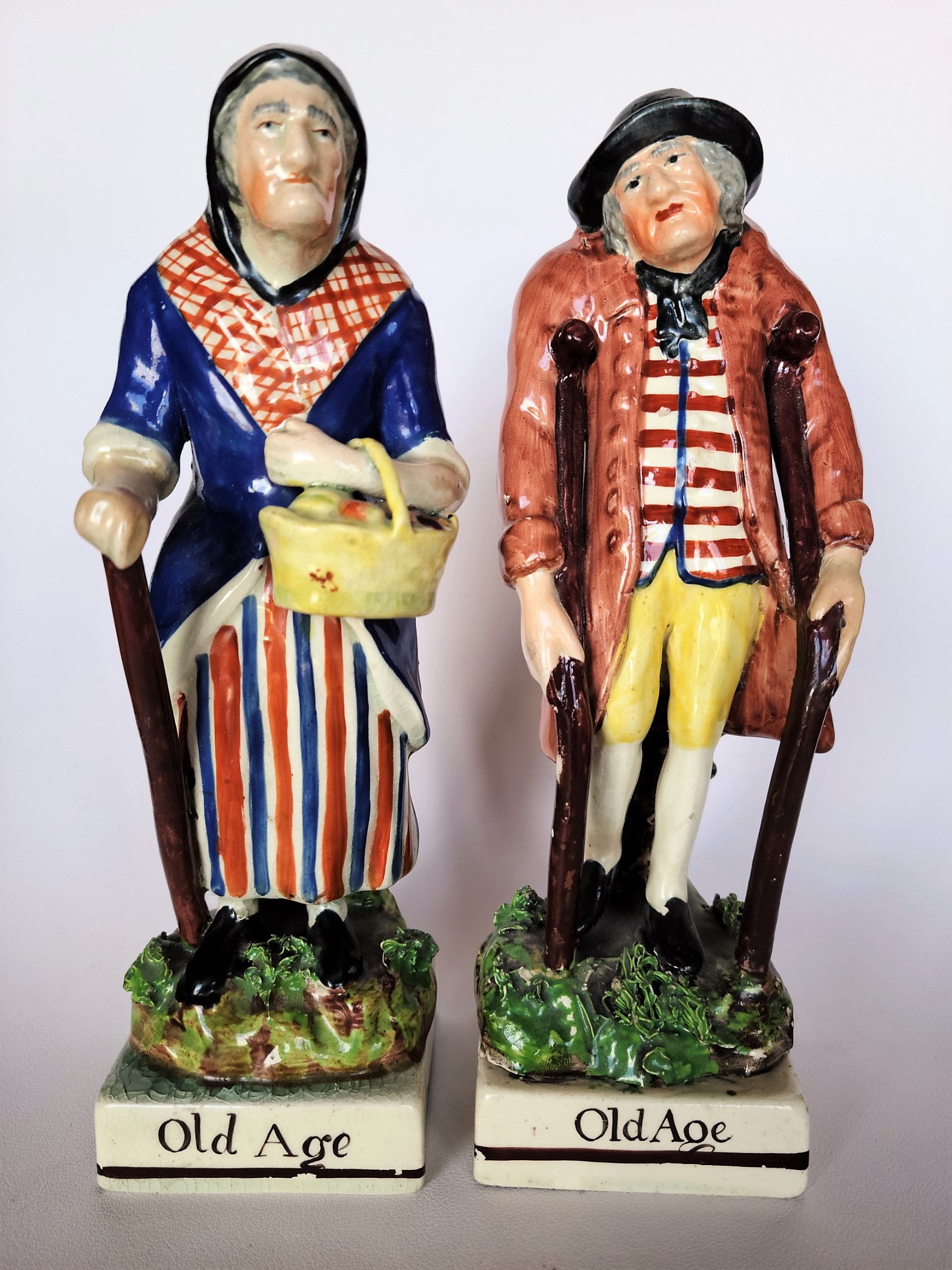
Old Age
This is a fine pair of early Staffordshire figures portraying “Old Age”. They stand about 8 ¾” tall and date to about 1820.
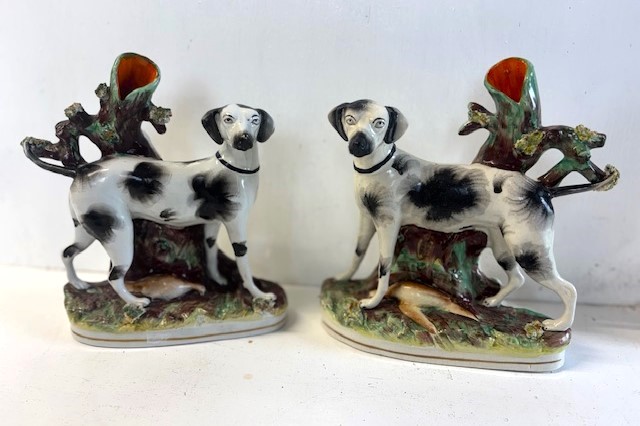
A pair of pointers
This is a rare pair of Staffordshire foxhounds, pointers, or game dogs. Whatever one decides to call them, they are an unusual and very fine pair.
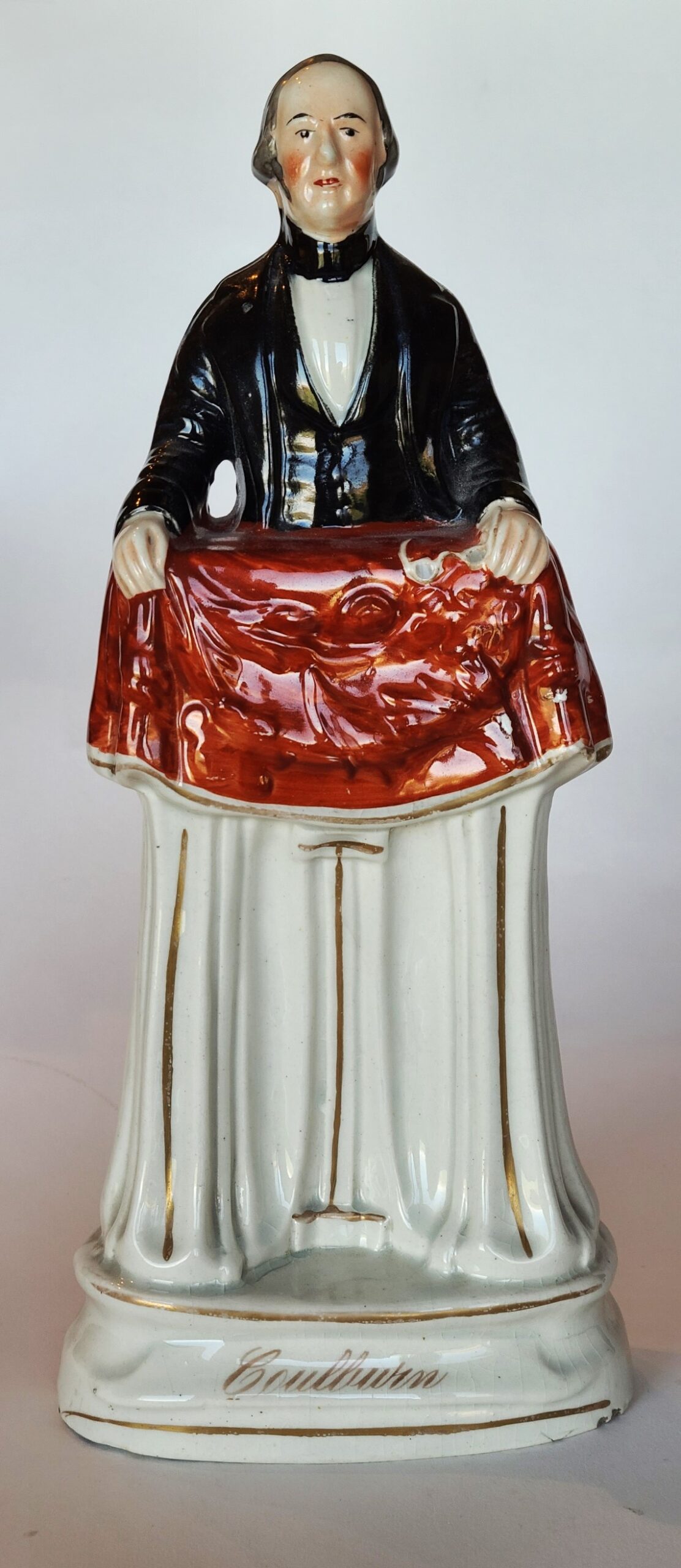
Reverand Edward Meyrick Goulburn
This is a rare Staffordshire figure of the Reverand Edward Goulburn, standing approximately 11 1/2” tall and dating to about 1860.
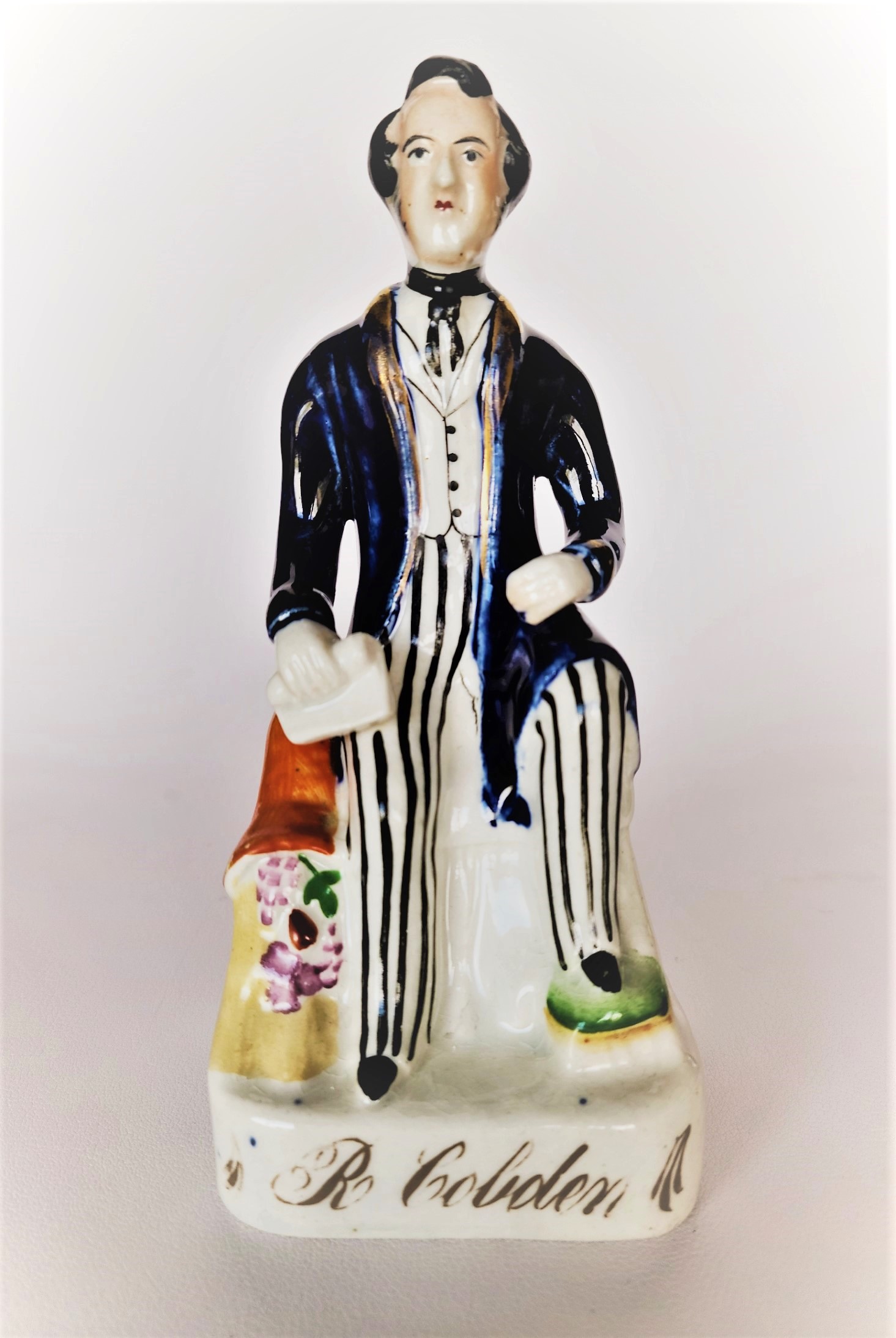
Richard Cobden
This is a rare Staffordshire figure of Richard Cobden, the English politician, economist, and leader of the effort to abolish the Corn Laws in 1846.
Membership
We warmly welcome new members – join us for free!
Wherever you are in the world, whether you are an experienced collector, a researcher interested in the folk art of England, or just someone who is intrigued by Staffordshire figures, please join us and get the rest of this year for free! Stay with us next year and pay an annual fee of £45 / $50 per household in January.